
© 2012 International Trachoma Initiative | The Task Force for Global Health | 325 Swanton Way; Decatur, GA USA 30030 | 1-800-765-7173 | Directions | Contact | Privacy
subnav
Trachoma Expert Committee
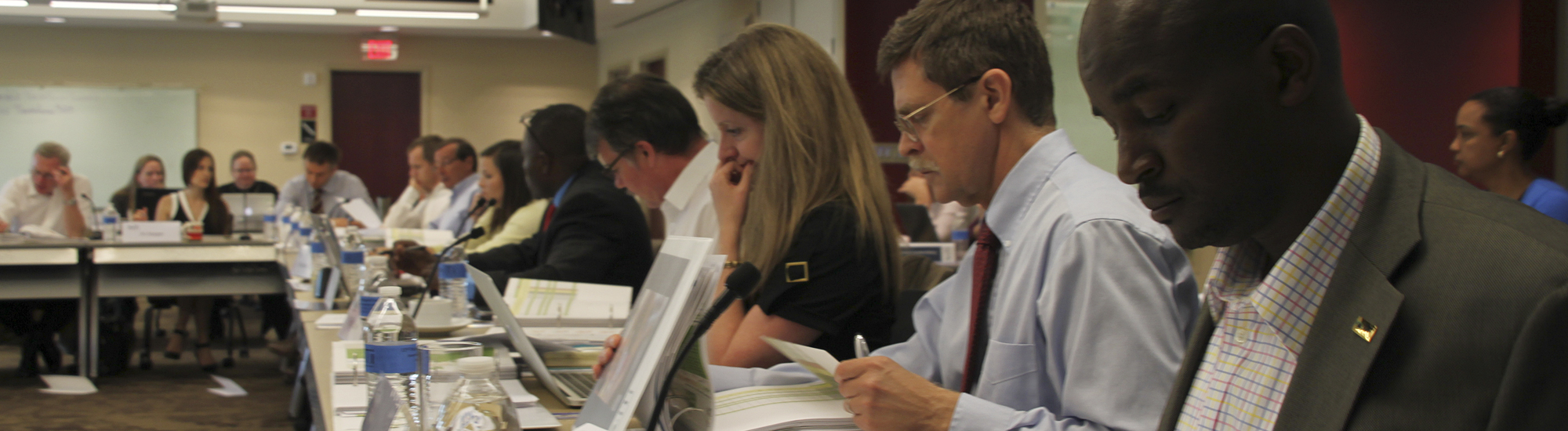
ITI’s Trachoma Expert Committee (TEC) is an independent body of internationally recognized experts in the fields of public health, ophthalmology, blindness prevention, and all aspects of the SAFE Strategy. TEC members provide invaluable advice to ITI on strategic, technical and operational issues. The TEC is a decision-making body that meets twice annually to review country applications for Zithromax.
Trachoma Expert Committee Members
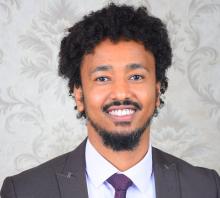
Anthony Solomon, MB BS (Hons), PhD, DTM&H, PGCAP, MRCP
Allen Foster (Chairman), OBE
International President of CBM
Co-Director of the International Centre for Eye Health at London School of Hygiene and Tropical Medicine
Allen Foster was born and educated in Ormskirk, Lancashire, England. After completing medical school at the University of Birmingham, he married Penny and together they went to Tanzania to work as general doctors with CBM at Mvumi Hospital. Allen helped develop a national eye care plan, and with support from Dr. Joseph Taylor and CBM, he established a clinical training program for doctors and ophthalmic assistants training over 200 people from all over Africa.
After 10 years in Tanzania, he returned to the United Kingdom working for CBM, based at the Institute of Ophthalmology in London. He was appointed CBM’s International Medical Director in 1987, and visited eye projects supported by CBM in Asia, Africa and Latin America. This unique experience of an academic research and teaching base in London, with overseas exposure to eye care delivery on three continents, facilitated the development of training courses in Community Eye Health, both in the UK and in developing countries. Allen was also closely involved in the development of the VISION 2020 strategy and global initiative.
Allen moved to the London School of Hygiene and Tropical Medicine in 1999 where he continues his work as Director of the International Centre for Eye Health. He maintains an interest in research working on blinding eye diseases in children, ocular infections and cataract services.
In 2006, Allen was appointed president of CBM, the largest NGO involved in providing services and promoting the rights of people with disability. Allen has numerous publications and several international awards, but is best known as a passionate advocate and teacher of VISION 2020.
Paul Courtright, DrPH
Co-director, Kilimanjaro Centre for Community Ophthalmology
Assistant Professor, Department of Health Care & Epidemiology/Ophthalmology, University of British Columbia
Associate Member, UBC Center for Health Services Policy Research
Dr. Paul Courtright is co-director of the Kilimanjaro Centre for Community Ophthalmology (KCCO) of Tumaini University in Moshi, Tanzania. Dr. Courtright and his wife, Dr. Susan Lewallen, established the KCCO in Moshi in 2001. The KCCO is the largest ophthalmic research and community ophthalmology training centre in Africa.
Prior to this time, Dr. Courtright established and directed the British Columbia Centre for Epidemiologic & International Ophthalmology (1995-2001) at the University of British Columbia. He is on faculty at the University of British Columbia with joint appointments in the Department of Ophthalmology and Department of Health Care & Epidemiology. He has also lived and worked in Malawi (4 years), Ethiopia (1 year), Egypt (1 year), and Korea (4 years). His DrPH is from the University of California, Berkeley (1988) and he has an MPH from Johns Hopkins University (1984). He also underwent the fellowship in preventive ophthalmology at the JHU Wilmer Eye Institute (1983-4).
The majority of Dr. Courtright’s published work (150 scientific articles) has been carried out in Africa and Asia. He and his wife are recipients of the 2008 “International Blindness Prevention Award” of the American Academy of Ophthalmology. He serves on committees for the World Health Organization, International Agency for the Prevention of Blindness, and other organizations and served as Executive Secretary of the International Society for Geographical & Epidemiological Ophthalmology from 1994-2008. His areas of interest are in trachoma, gender and blindness, health systems research, cataract, pediatric cataract, eye complications of leprosy, and other conditions common in developing countries.
Dr. Serge Resnikoff

Serge Resnikoff, MD, PhD, is an international expert in global public health, ophthalmology and eye health. He is a visiting professor at the University of New South Wales and a faculty member at the University of Geneva, Switzerland, and Lyon and Paris, France. He is also the President of International Health and Development and the President and Chair of Organisation pour la Prévention de la Cécité (OPC), an NGO active in prevention of blindness in francophone Africa.
From 2008 to 2010 he served as CEO of Thea, a European pharmaceutical group, active in 65 countries, specialized in the research, development and commercialization of ophthalmology products.
From 2004 to 2008, he coordinated various World Health Organization (WHO) programs aiming to prevent and manage noncommunicable diseases such as cancer, diabetes, and cardiovascular, respiratory, genetic, ear and eye diseases.
From 1999 until 2004, Prof. Resnikoff led the Program for the Prevention of Blindness and Deafness, which aims to make essential eye and ear care available to all. Since joining the WHO in 1995, he has developed public health strategies and contributed to built global partnerships such as Vision 2020, involving governments, academic institutions, non-governmental organizations and private sector groups.
Before joining WHO, Prof. Resnikoff worked for 14 years in developing countries, mainly in sub-Saharan Africa, on assignments from the French government to strengthen local and national capacity in disease prevention and control. These assignments also included epidemiologic, clinical, and operational research, and international program planning, implementation, and evaluation. From 1989 to 1995, he was the director of the Institute of African Tropical Ophthalmology, a WHO Collaborating Center.
Joseph M. Feczko, MD
Former Senior Vice President and Chief Medical Officer, Pfizer Inc
Joseph Feczko, M.D. was, until May 2009, Senior Vice President and Chief Medical Officer (CMO) of Pfizer Inc. and member of the Executive Leadership Team with global responsibilities for all aspects of the company’s medical, regulatory and safety activities. He is board certified (U.S.) in Internal Medicine and Infectious Diseases. Following a time in private practice, he joined Pfizer in 1982 in New York. He then worked for ten years in the United Kingdom for both Pfizer and Glaxo where his responsibilities included supervising clinical research, regulatory affairs, data management and safety reporting. He returned to Pfizer in New York in 1996 where he held positions of increasing responsibility in clinical research and regulatory affairs and safety culminating in the role of CMO.
He is currently a member of the board of directors of the Foundation for the National Institutes of Health, Research!America and the International Longevity Center as well as the New York Academy of Medicine.
He is a member of the board of directors of the Accordia Global Health Foundation and the Technical Expert Committee for Trachoma of the Task Force for Global Health.
He is a member of the governing board of the Technology Strategy Board of the United Kingdom.
Anthony Solomon, MB BS (Hons), PhD, DTM&H, PGCAP, MRCP
Lecturer, London School of Hygiene & Tropical Medicine
Specialist Registrar, The Hospital for Tropical Diseases, London, U.K.
Director, Rombo Trachoma Research Project, Rombo District, Tanzania
Anthony Solomon was born in Brisbane, Australia, and educated at the Anglican Church Grammar School and Mayne Medical School, University of Queensland. After residency at the Princess Alexandra Hospital in Brisbane, he completed the Diploma in Tropical Medicine and Hygiene at the London School of Hygiene & Tropical Medicine before taking up a research post in the Northern Region of Ghana. There, in collaboration with the National Eye Care Programme, he showed that Guinea worm volunteers could reliably diagnose and treat trachoma using azithromycin. In Tanzania he established a trachoma field research unit carrying out longitudinal studies on the impact of community-based treatment with azithromycin, funded by a Wellcome Trust / Burroughs Wellcome Fund program grant. He helped to lead participatory evaluations of ITI-supported trachoma control programs in eight countries in Asia and Africa.
His University of London PhD on trachoma was awarded the Woodruff Medal for Excellence in Medicine. He is the recipient of the UK House of Commons’ Millennium Medal for Excellence in Science, Engineering and Technology.
He is currently the holder of a Walport Academic Clinical Lectureship, allowing him to continue research and teaching at the London School of Hygiene & Tropical Medicine, and undertake clinical infectious diseases at the Hospital for Tropical Diseases and University College London Hospitals.
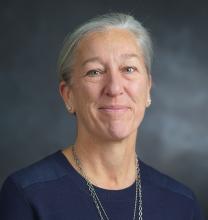
Sheila West, PhD
El-Maghraby Professor of Preventive Ophthalmology, Wilmer Eye Institute, Johns Hopkins School of Medicine
Director, Trachoma Research Program, Dana Center for Preventive Ophthalmology and the Center for Global Health, Johns Hopkins University.
Sheila West received her Ph.D in epidemiology from Johns Hopkins School of Public Health in 1980. She accepted a position to work on Hepatitis B with the University of The Philippines consortium, publishing articles on the seroprevalence within rural communities. This initial project cemented a commitment to work on public health problems in disadvantaged communities. Dr. West joined the Wilmer Eye Institute at Johns Hopkins School of Medicine, becoming a professor in 1999, and currently she is the El Maghraby Professor of Preventive Ophthalmology. She has published over 200 articles in the field of Public Health Ophthalmology and has received several awards for her research. Notably, she was a recipient of a Research to Prevent Blindness Senior Scientific Investigator award, which she has used for her research into preventing trachoma, the leading infectious cause of blindness worldwide. Dr. West is an internationally respected expert on trachoma, and has chaired the World Health Organization Global Alliance for Elimination of Blinding Trachoma by 2020.
Dr. West has devoted her career to public health ophthalmology. She has lead clinical trials in surgery for trachoma in Ethiopia, the effect of water and hygiene interventions in Niger, and antibiotic use for trachoma control in Tanzania. The Kongwa Trachoma Project under her direction has been operating for 20 years in Tanzania, and carried out numerous, significant research projects into subjects as diverse as diagnostics, immunology, genetics, epidemiology, and evaluation of control programs for trachoma. Currently the recipient of a $12 million grant from the Bill and Melinda Gates Foundation for research into trachoma control, Dr. West is at the forefront of research and projects in public health ophthalmology and is the current Vice Chair for Research at Wilmer Eye Institute at Johns Hopkins University.